
Which Shower Enclosure Style Fits Your Bathroom
Most people start with a photo they like. The shape of your bathroom decides what will actually work. This table gives the usual match, and we confirm it when we measure.
| Your bathroom | Style that usually fits | Why |
|---|---|---|
| Tub-shower combination, standard alcove | Sliding or semi-frameless | Slides or swings without needing floor space outside the tub |
| Walk-in shower with a full tile surround | Frameless | Clean look with the fewest metal parts to wipe down |
| Corner shower | Neo-angle or corner frameless | Uses the corner footprint and keeps the door swing small |
| Small bathroom or tight door swing | Sliding | No swing, so nothing hits the vanity or toilet |
| Steam shower | Steam enclosure | Full-height, sealed panels built to hold steam in |
| Bathtub only, curtain now | Glass tub enclosure | Replaces the curtain with fixed, hinged, or sliding glass |
| Existing aluminum frame you want to keep or replace | Framed or semi-frameless | Lower cost than full frameless |
Not sure which fits? Send us a photo of your bathroom.
Recent Baltimore Shower Projects
Real installs from our crew. Every enclosure is measured to the finished opening and cut to fit.
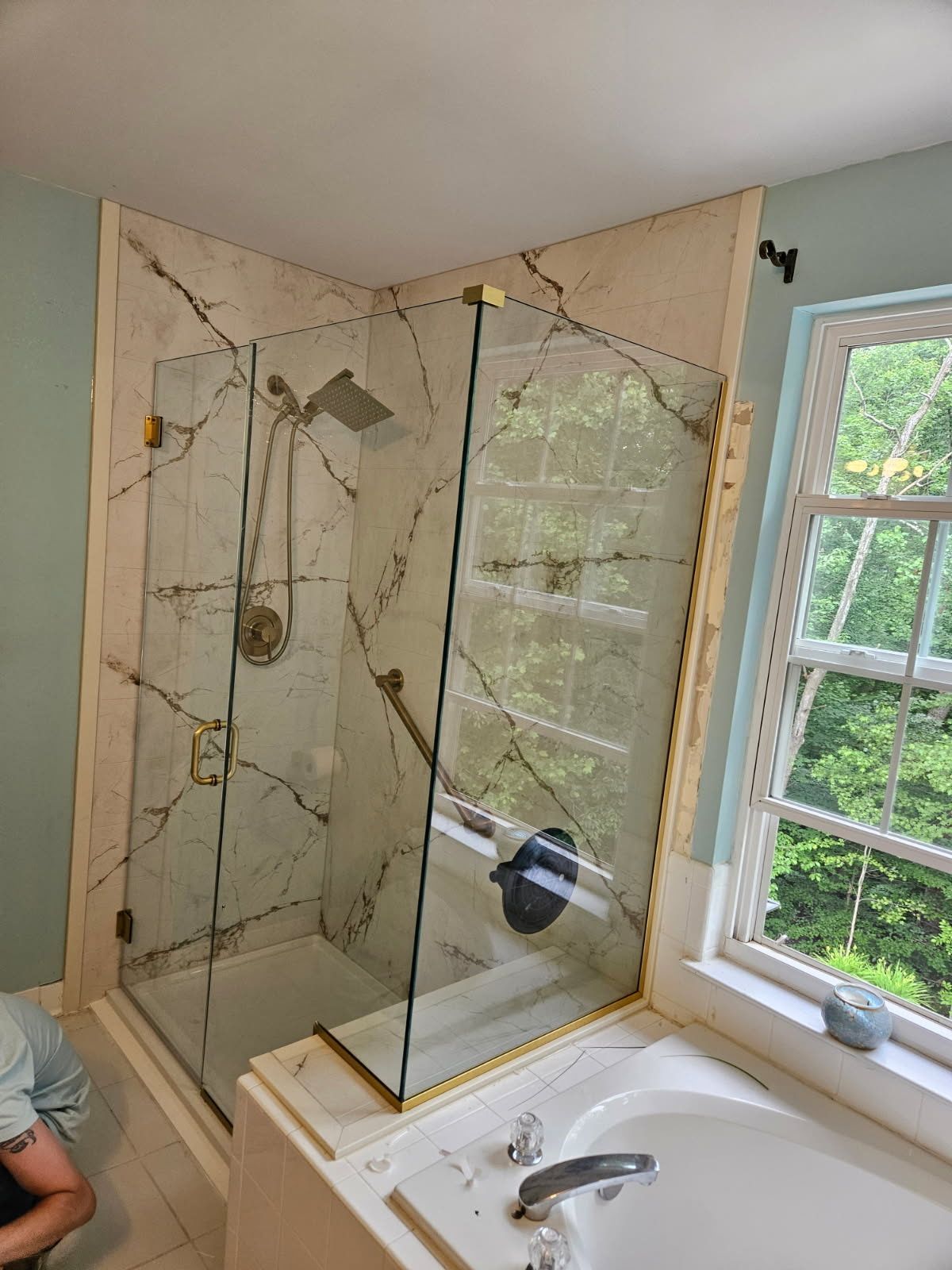
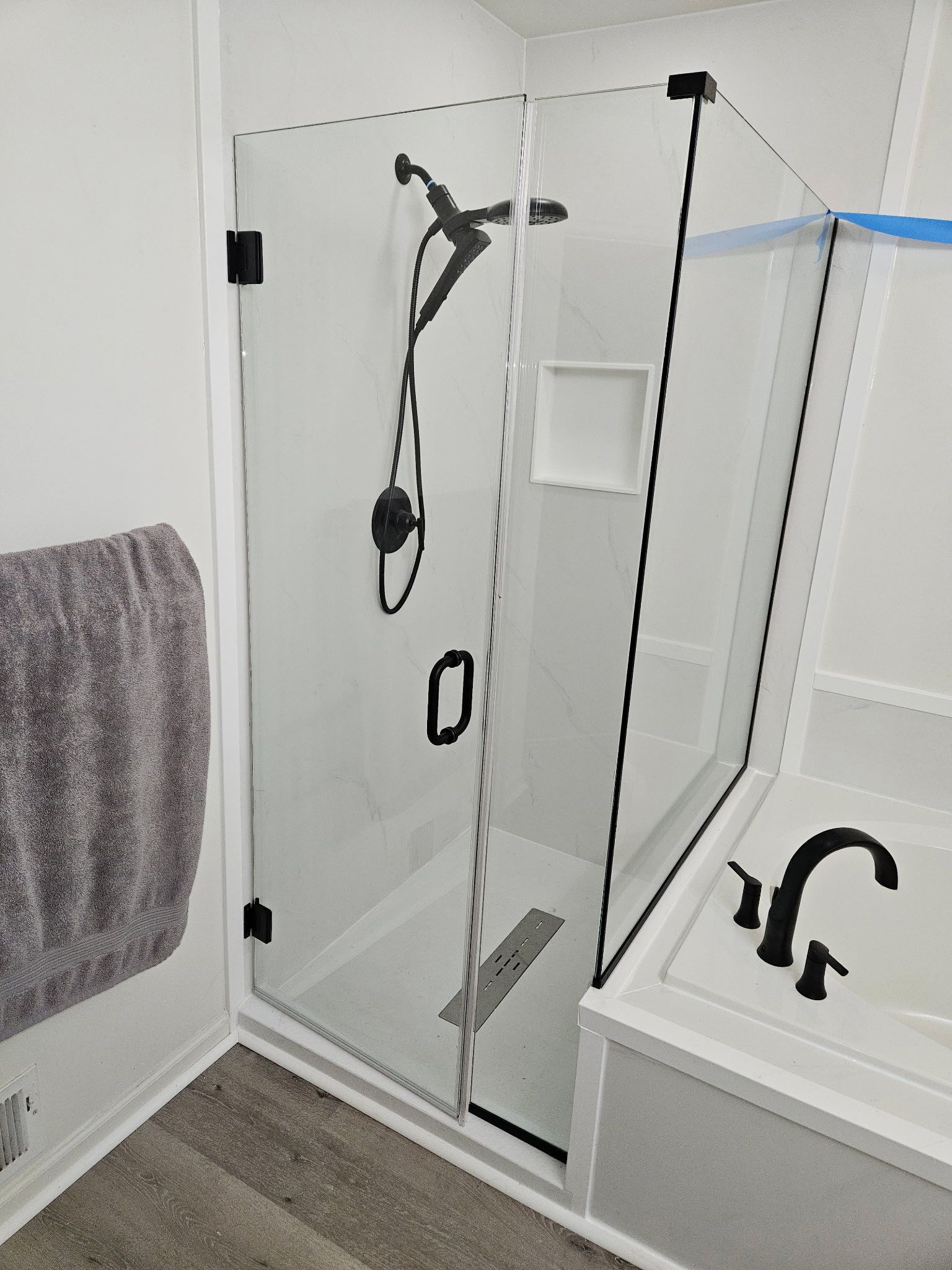
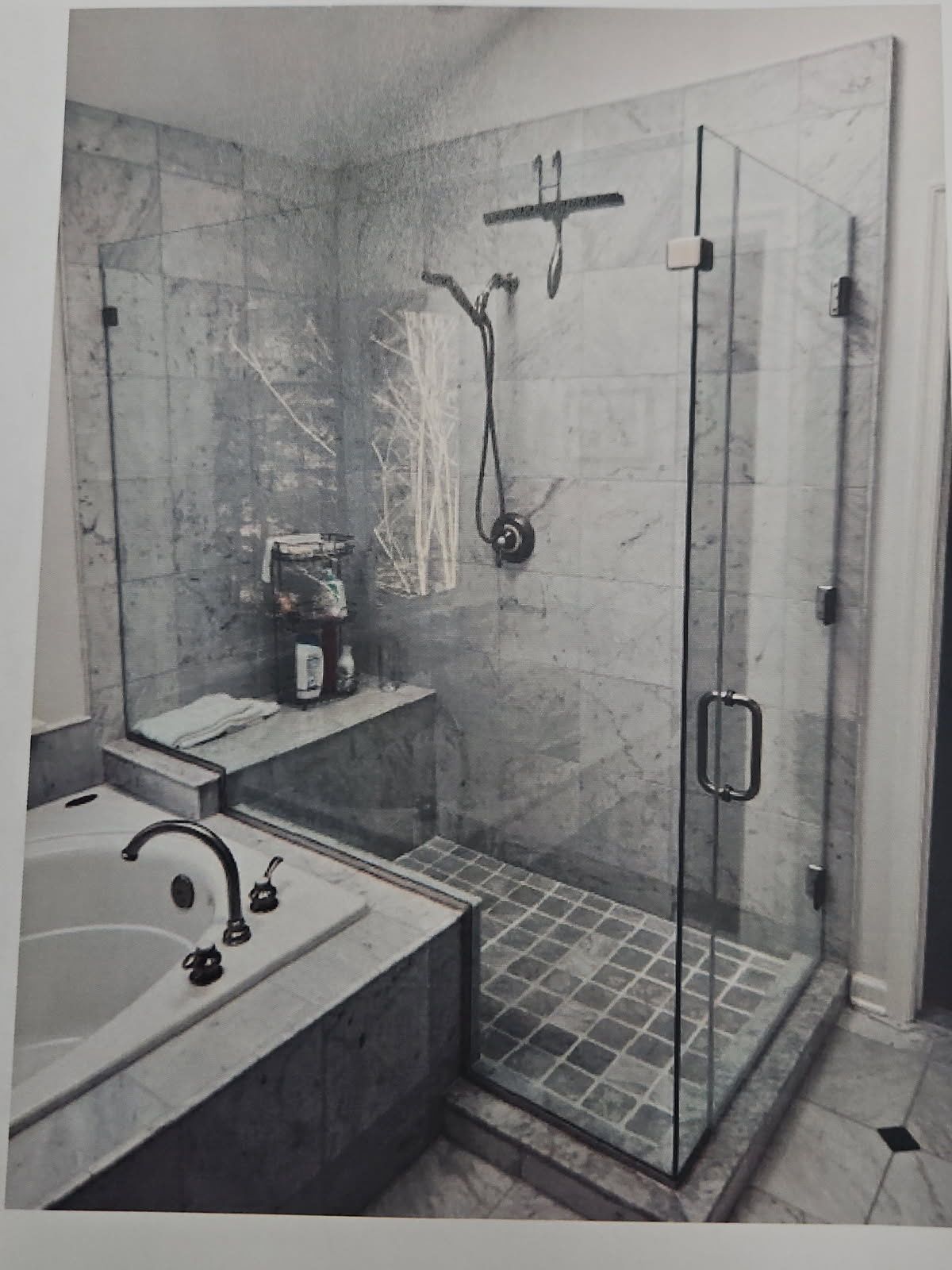
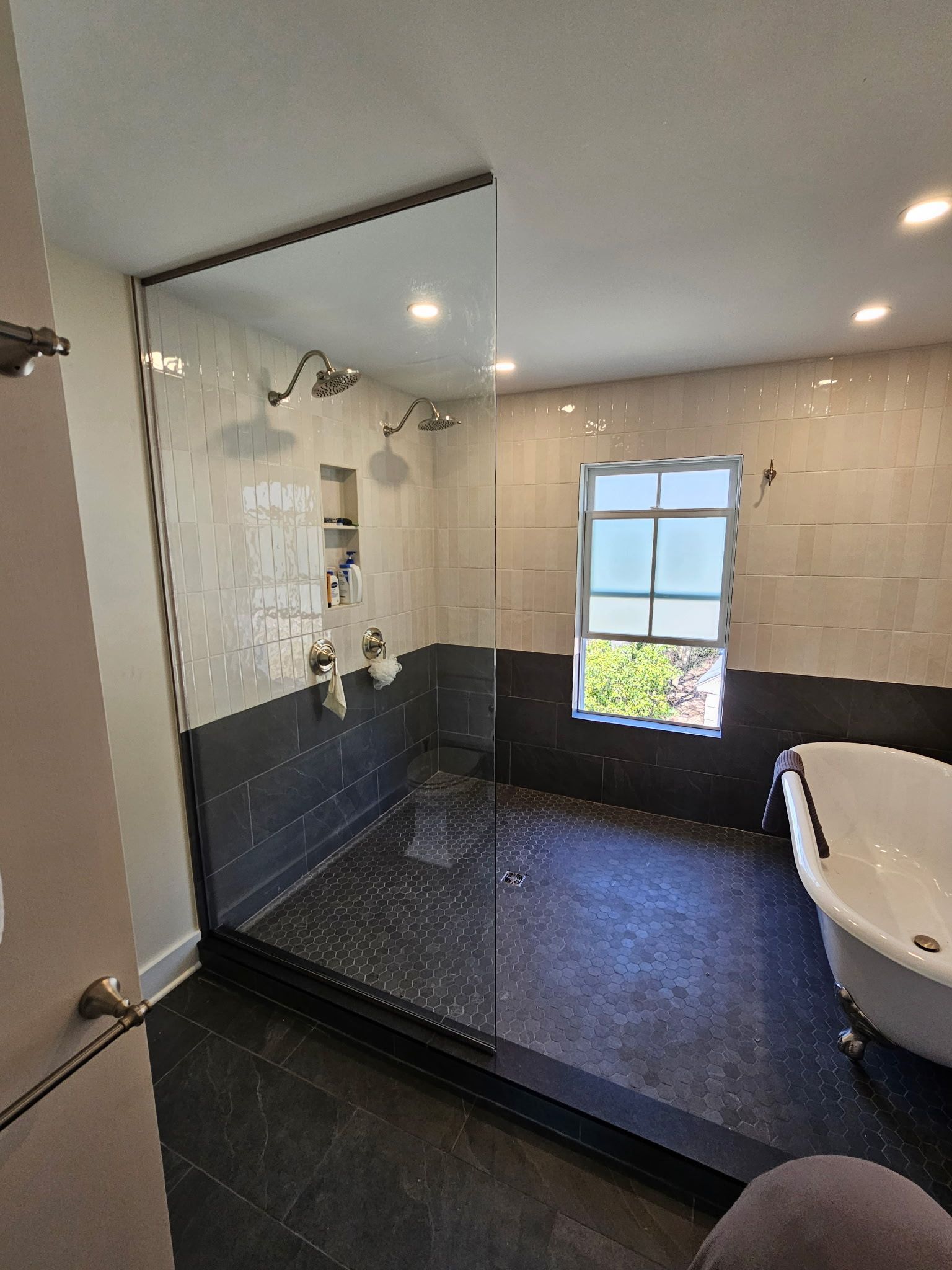
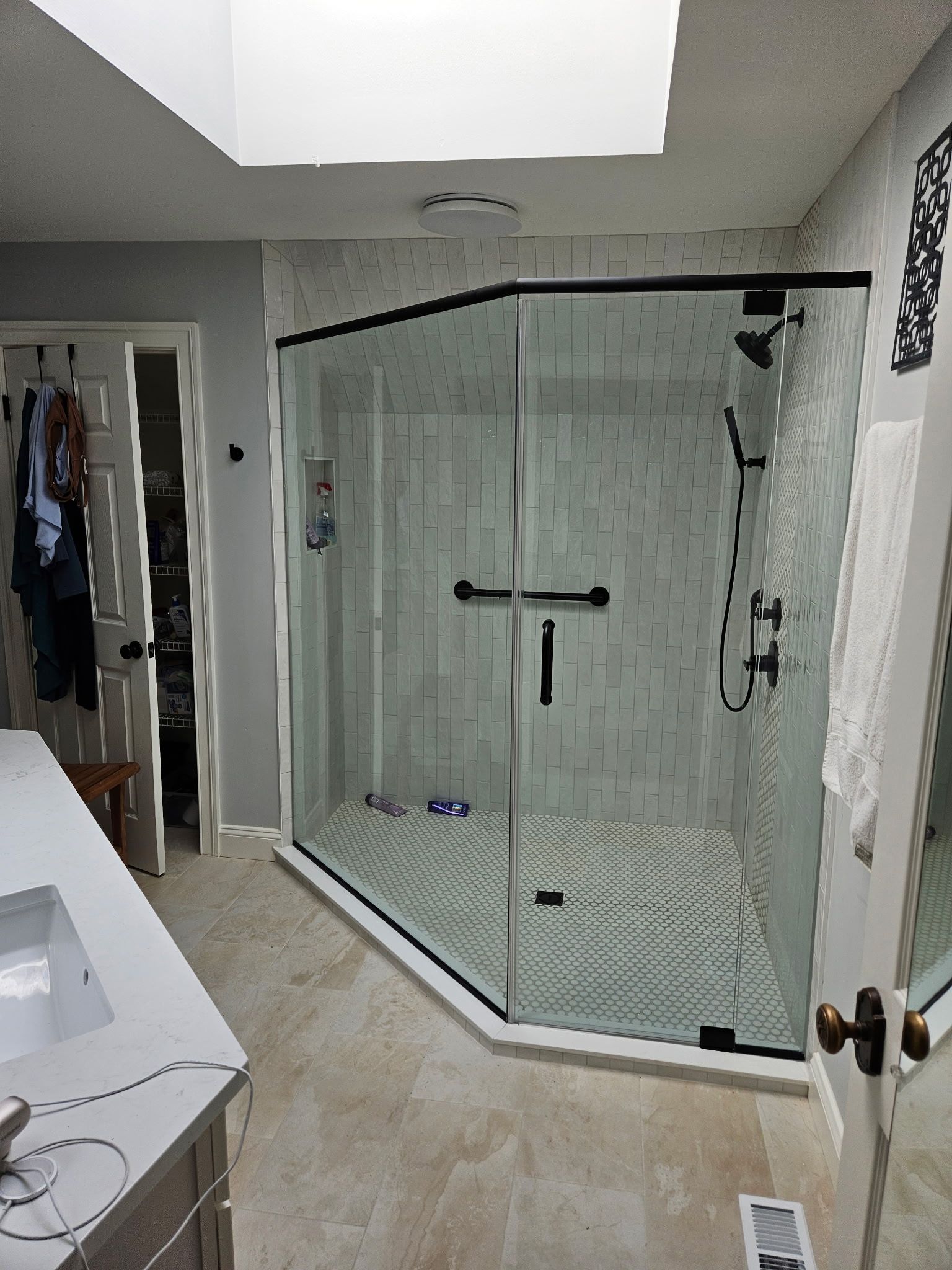
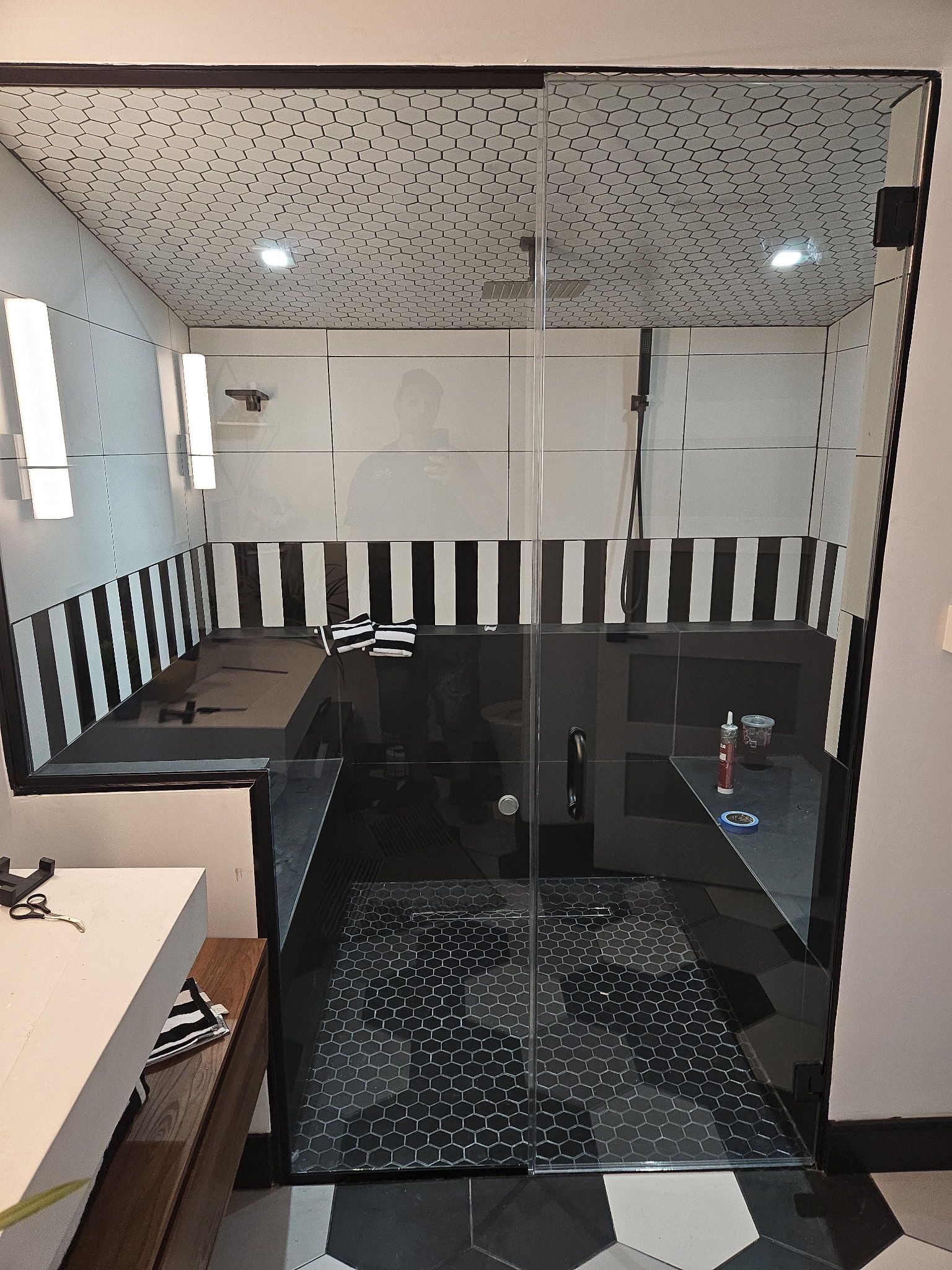
Custom Shower Enclosure Styles We Install
Frameless Shower Doors
Thick tempered glass held by hinges and clamps instead of a metal frame. There is less metal to clean and nothing to hide the tile. The glass is heavy, so the walls and curb need to be solid.
Semi-Frameless Shower Doors
Lighter glass with metal only where it does structural work. It looks cleaner than a full frame and costs less to build than frameless.
Sliding Shower Doors
Two panels that pass each other on a track. No swing means no clearance problem, which suits tub-shower combinations and tight bathrooms.
Neo-Angle Shower Enclosures
Three glass panels set at angles across a corner, with the door in the middle panel. It gives a corner shower a wider entry than a square corner would.
Steam Shower Enclosures
Full-height glass, usually to the ceiling, sealed to hold steam in. The glass layout is agreed before the room is finished.
Glass Tub Enclosures
Fixed, hinged, or sliding glass for a tub deck or alcove. It replaces the shower curtain and keeps water in.
Framed Shower Enclosures
Aluminum-framed doors and panels. The frame adds strength at a lower price and covers small gaps in older openings.
Hinged, Pivot, Corner, and Walk-In Designs
A hinged door swings out on side hinges. A pivot door turns on top and bottom pins. A corner enclosure uses two panels, and a walk-in design uses fixed panels with no door. Ask us which layout suits your bathroom.
Glass Thickness, Glass Types, and Hardware Finishes
The glass and the hardware decide how a shower looks, how it feels to use, and how long it lasts. These are the choices you will be asked about.
Glass thickness
Frameless doors are commonly made from 3/8 inch or 1/2 inch tempered glass. Semi-frameless and sliding doors often use 1/4 inch or 3/8 inch. Thicker glass feels more solid and resists flexing, but it weighs more, so it needs stronger hinges and a sound wall. We recommend a thickness based on the style, the size of the panel, and the wall it hangs from.
Safety glass
Glass in and around a shower is treated as a hazardous location, and building codes require safety glazing there. Tempered glass is heat-treated so that if it breaks, it breaks into small pieces instead of long sharp shards.
For a longer comparison of glass types, read our Types of Glass Guide.
Hardware finishes
Hinges, handles, clamps, and the header all come in a range of finishes: chrome, brushed nickel, polished nickel, matte black, satin brass, and oil-rubbed bronze. Match the finish to your faucet and fixtures so the room looks planned. Matte black shows water spots faster than chrome, and brushed finishes hide marks better than polished ones. At the shop, hardware samples are lined up on the wall for you to handle.
We source glass and hardware from established industry suppliers, including C.R. Laurence.
What Affects the Price of a Custom Shower Enclosure
We do not publish a price list, because two bathrooms that look alike can need very different glass. We quote from measurements. These are the things that move the number.
| Factor | What changes |
|---|---|
| Style | Frameless takes more glass and heavier hardware than a framed or semi-frameless door |
| Glass thickness | Thicker glass costs more and needs stronger hardware |
| Glass type | Low-iron, textured, and tinted glass cost more than standard clear |
| Number of panels | A door and one panel is simpler than a door, return, and fixed panels |
| Size of the opening | Larger panels use more glass and can be harder to handle and install |
| Hardware finish | Matte black and specialty finishes usually cost more than chrome |
| Condition of the opening | Out-of-plumb walls or a damaged curb can add work |
| Custom cuts or notches | Niches, benches, and shaped panels add fabrication time |
If you are comparing a quote from us with a kit from a home center, compare the glass thickness, the hardware, and whether the price includes measuring and installation. Read the full Shower Door Cost Guide.
Before We Measure: What to Settle First
A few decisions made before the glass is ordered save time and prevent rework. If you have a tile setter, plumber, or contractor on the job, share this list with them.
- Finish the tile and the base first. We measure the finished opening, not the bare wall.
- Set the faucet, valve, and shower head locations. Handles and trim need to clear the door and any fixed panel.
- Decide which way the door opens. The hinge side matters for the vanity, the toilet, and the bathroom door.
- Check the curb or threshold. It should be level and solid enough to take the weight of the glass.
- Choose the hardware finish early. Match it to the faucet and fixtures.
- Tell us about steam. If the shower will have a steam generator, the glass layout, the ceiling, and the door are planned together.
Working with a contractor or designer? Send us their contact details and we will coordinate the measuring visit.
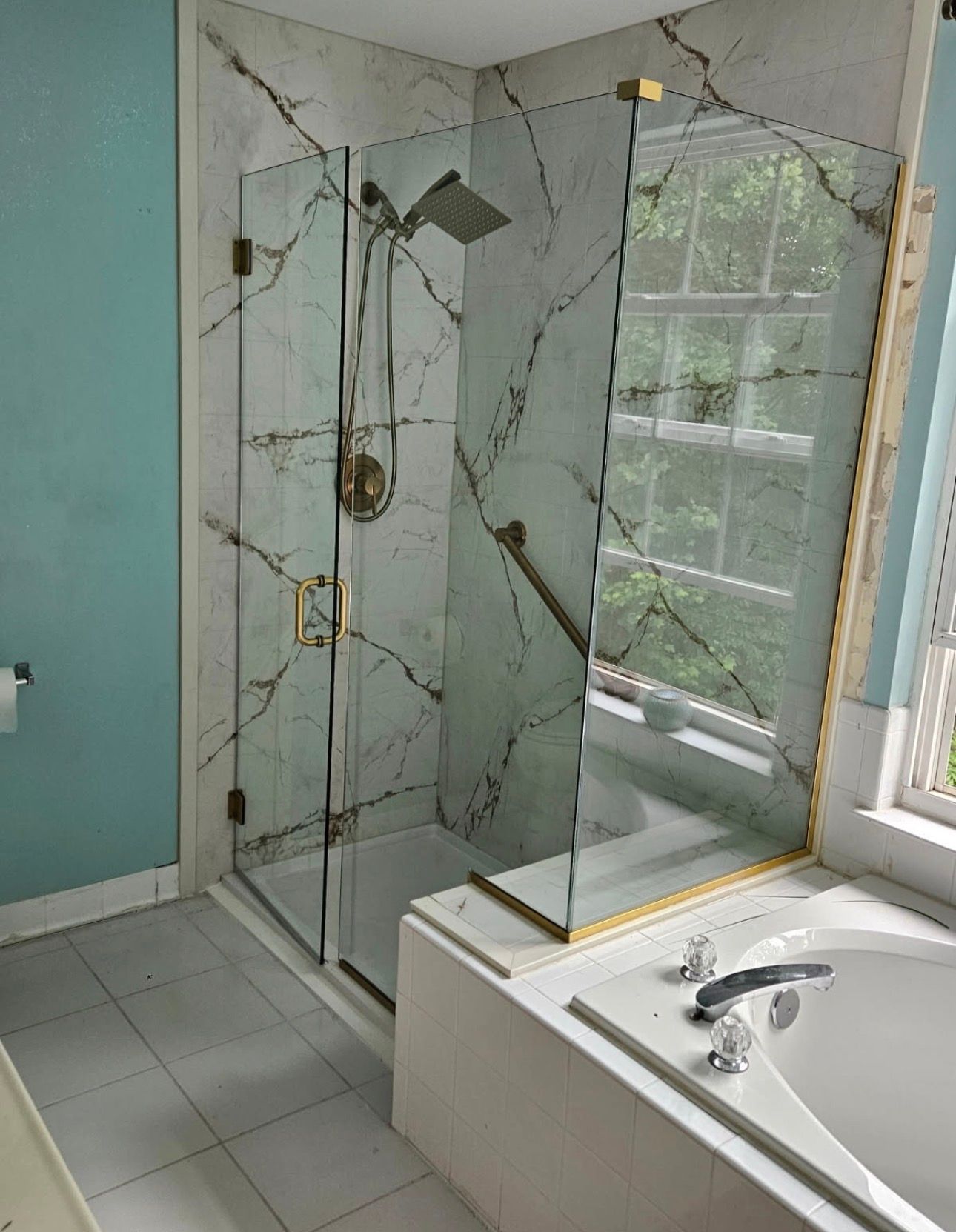
How a Custom Shower Enclosure Is Measured and Built
- We listen first. You call, stop by the shop, or send photos. We ask what you want the shower to do, and if you are leaning toward a cheaper option, we explain what it will and will not hold up to.
- We go through the options. Style, glass, hardware, and finish. Hardware samples are on the wall at the shop, and you can talk with the people who cut and fit the glass.
- We measure on site. We check the walls for plumb, the curb for level, and the tile or base for anything that affects the glass. Free estimates.
- You confirm glass, hardware, and timeline. Lead time depends on the glass and the job, and we tell you before you commit.
- Installation. When the materials are in, a crew installs the enclosure and finishes the job.
Why Baltimore Homeowners Choose Baltimore Glass Company
- Established 1928: nearly a century of glass work in Baltimore.
- Measured for your bathroom: no stock sizes, no guesswork.
- Straight answers: we tell you what a cheaper option will and will not do.
- Free estimates across our service areas.
Or call (443) 443-5585.
Common Shower Enclosure Problems We See in Baltimore Bathrooms
Many calls start with a problem, not a design. These are the ones we hear most.
The door leaks at the bottom or the sides
Water getting out is usually a fit issue, not a bad door. A curb that has settled, or a door hung on a wall that is out of plumb, can let water through. If the door was never a good fit for the opening, a custom replacement is the lasting answer.
A sliding door that sticks or jumps the track
After years of use, rollers wear and tracks fill with soap and mineral buildup. If the frame is bent or the glass is chipped, replacing the unit is the more reliable answer.
Cloudy glass and mineral buildup
Hard water leaves deposits on glass over time. Regular wiping helps. Etched or badly stained glass is hard to restore, and replacing the panel is often the practical fix.
A bathroom that was retiled and the old door no longer fits
New tile changes the opening by a fraction of an inch or more. A custom enclosure is cut to the new dimensions, which is why we measure after the tile is set.
An old framed door you want to replace with frameless
The frame comes out, the walls and curb are checked, and the frameless hardware is set to the opening. Describe the problem and send a photo.
Caring for Your Shower Glass
Most shower glass problems come from water left to dry on the surface. A few habits keep it clear.
- Wipe or squeegee after each use. Water that dries on the glass leaves mineral spots.
- Use gentle cleaners. A non-abrasive glass cleaner or a vinegar and water mix with a soft cloth is usually enough. Harsh or abrasive products can scratch glass and dull hardware finishes.
- Keep tracks and sweeps clean. On a sliding door, clear the track so the rollers move freely.
- Do not hang weight on the door. Towels and robes on a frameless door handle stress the hinges and the glass. Use a hook on the wall.
- Check hinges and screws now and then. If a hinge looks loose or the door starts to sag, call us at (443) 443-5585 before it gets worse.