
Six Types of Glass, Explained
Every piece of glass we install starts with a choice of type. Pick the right one and the glass is safe, clear, and built for its job. Tap any plate to jump to its section.
Tempered Glass
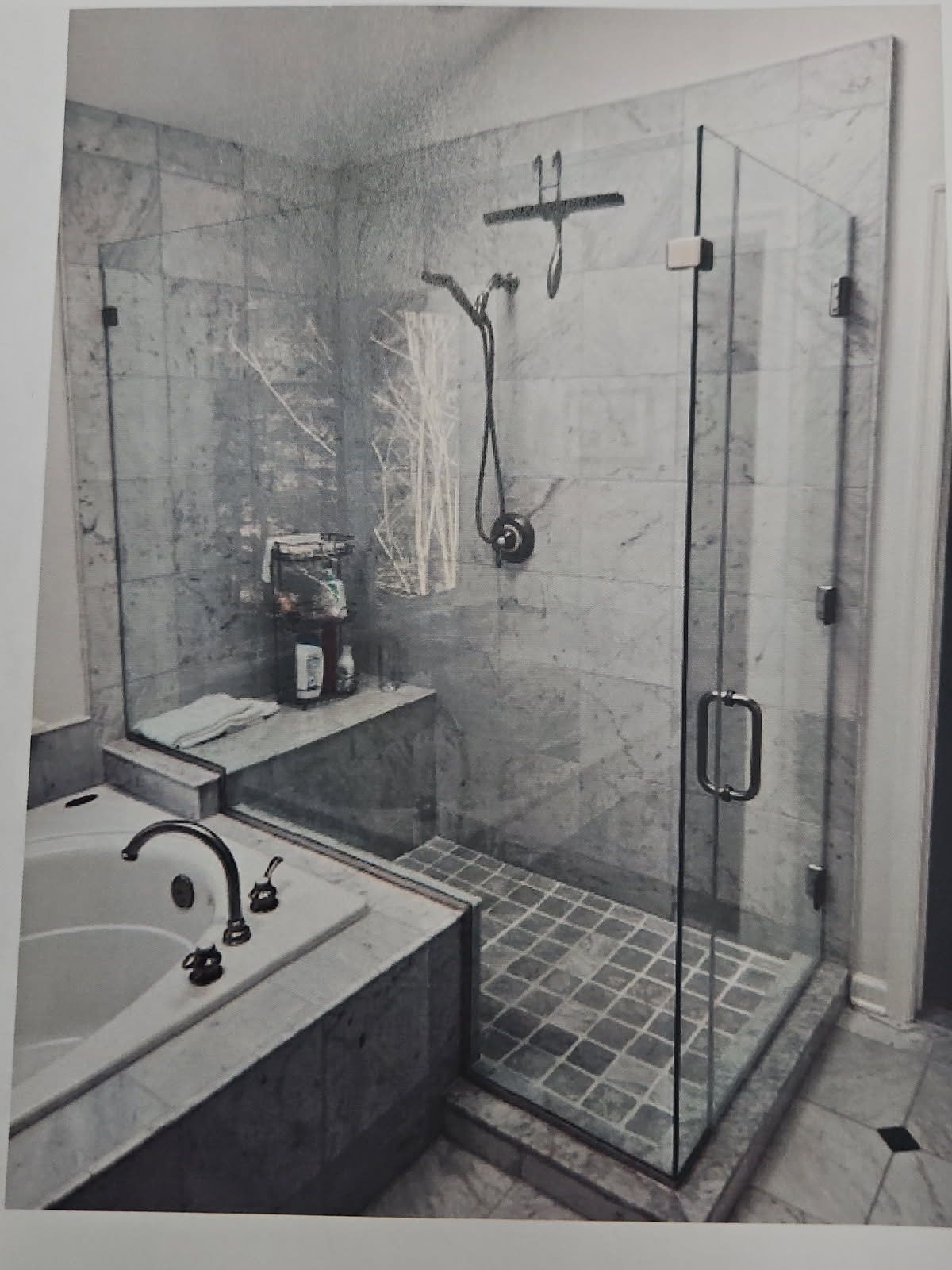
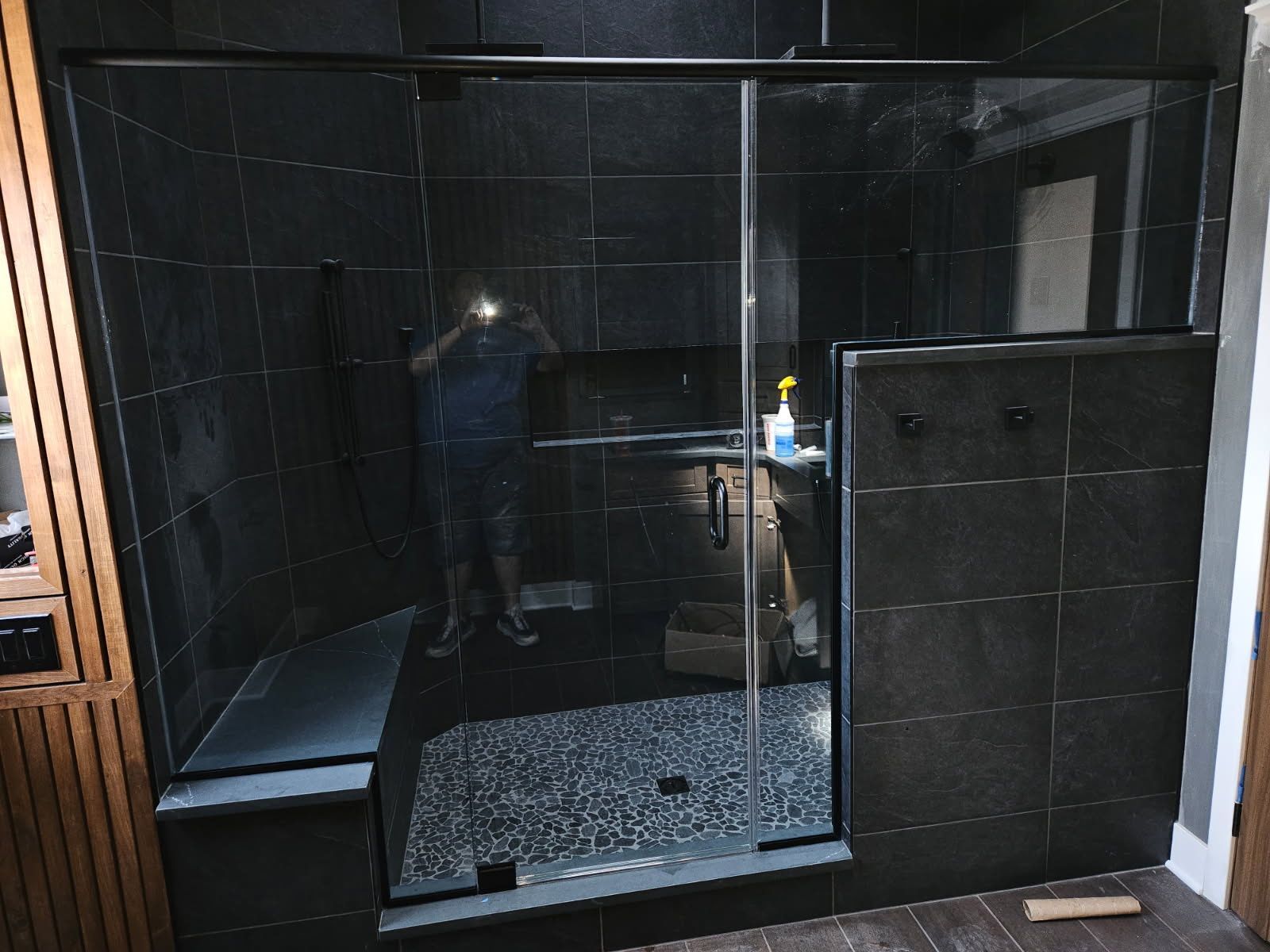
Tempered glass is standard glass that has been heat-treated so it is several times stronger. If it does break, it crumbles into small, dull pieces instead of long, sharp shards.
It cannot be cut, notched, or drilled after tempering, so every cut and hardware hole is made first. That is why we measure carefully before we order, and why we measure shower openings after the tile is finished.
Building codes call for safety glazing such as tempered glass in hazardous locations, including shower enclosures and glass in or beside doors.
See it in our shower enclosures and storefront glass.
Laminated Glass
Laminated glass bonds two layers of glass around a clear plastic interlayer. If it cracks, the pieces stay stuck to the interlayer, so the pane stays in one piece.
That same interlayer cuts outside noise and blocks most ultraviolet light. It is a smart pick where sound control, added security, or protection for furnishings and flooring matters.
Insulated Glass Units
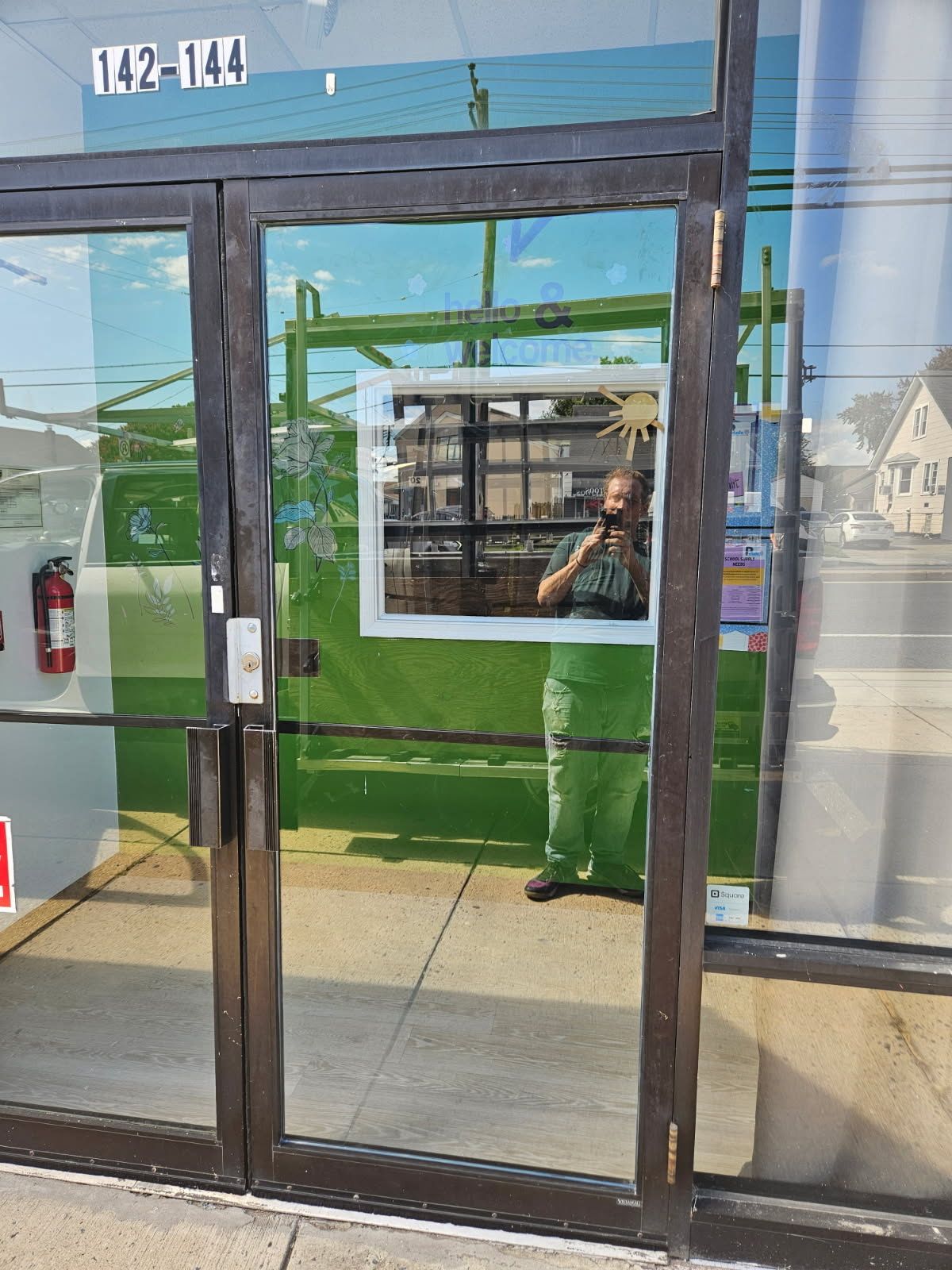
An insulated glass unit, or IGU, is two panes of glass separated by a sealed air space, often filled with argon. That space slows heat moving through the window.
Over time the seal can fail and moisture gets between the panes. You will see fog or haze you cannot wipe away. When that happens, the sealed unit can be replaced without replacing the whole window frame.
That is exactly what we do. See insulated glass replacement for how it works.
Low-Iron Glass
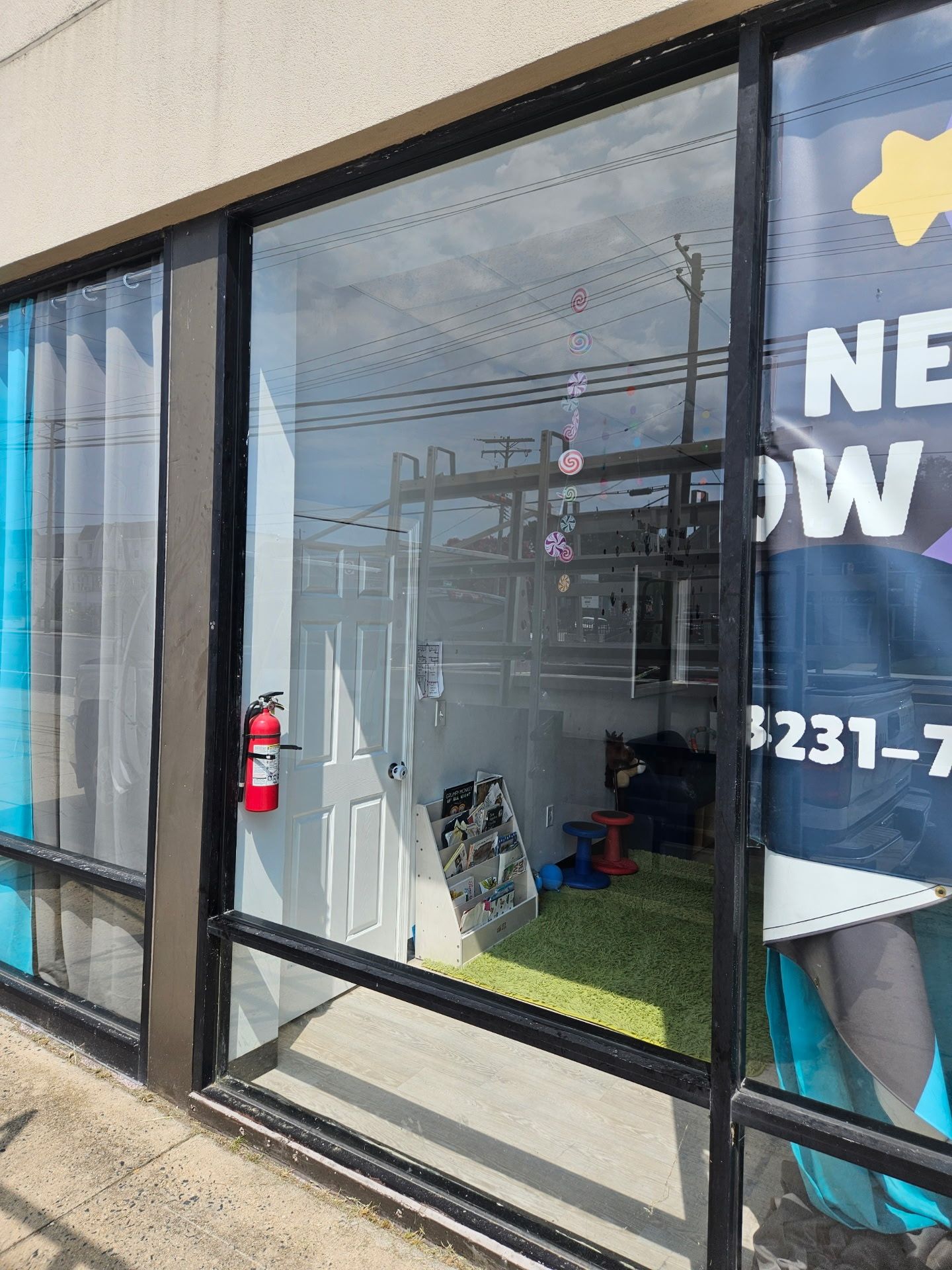
Standard clear glass has a faint green tint, most visible along the edges. Low-iron glass has less iron in it, so it looks clearer and shows colors the way they really are.
The difference is easiest to see against white tile, marble, and light finishes. On darker tile it is subtler. We are glad to show you both side by side before you decide. For the cost impact, see our Shower Door Cost Guide.
Frosted and Decorative Glass
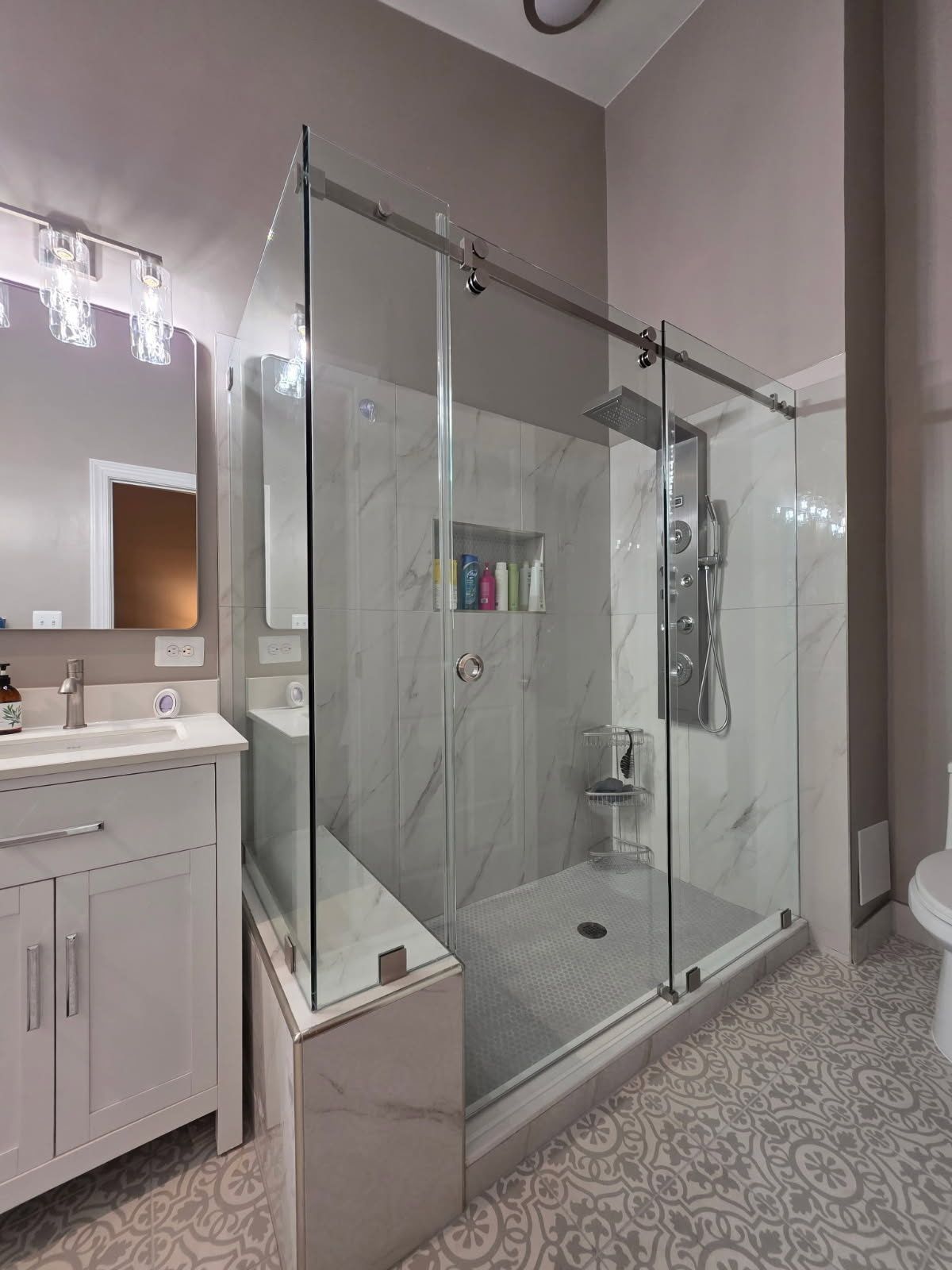
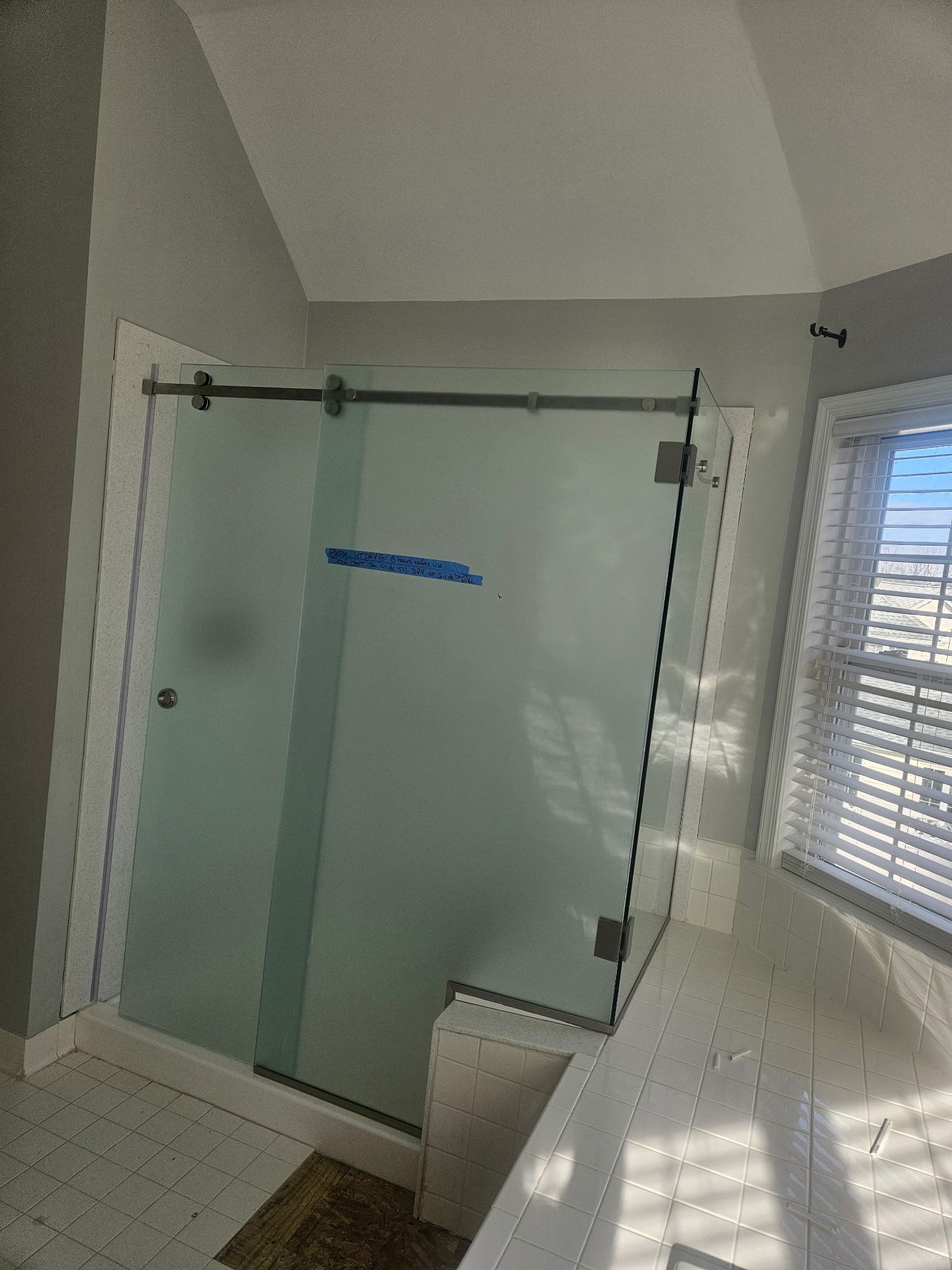
Frosted, rain, textured, and patterned glass all scatter the view while letting daylight through. Each has its own look, from soft and even to rippled and pebbled.
Frosted glass is a popular upgrade on sliding and frameless shower doors, and a clean fix for a bathroom window that faces a neighbor. Ask about options when you request a quote.
Annealed Glass
Annealed glass is standard float glass that has been cooled slowly, so it can be cut to size. Most other glass types start here.
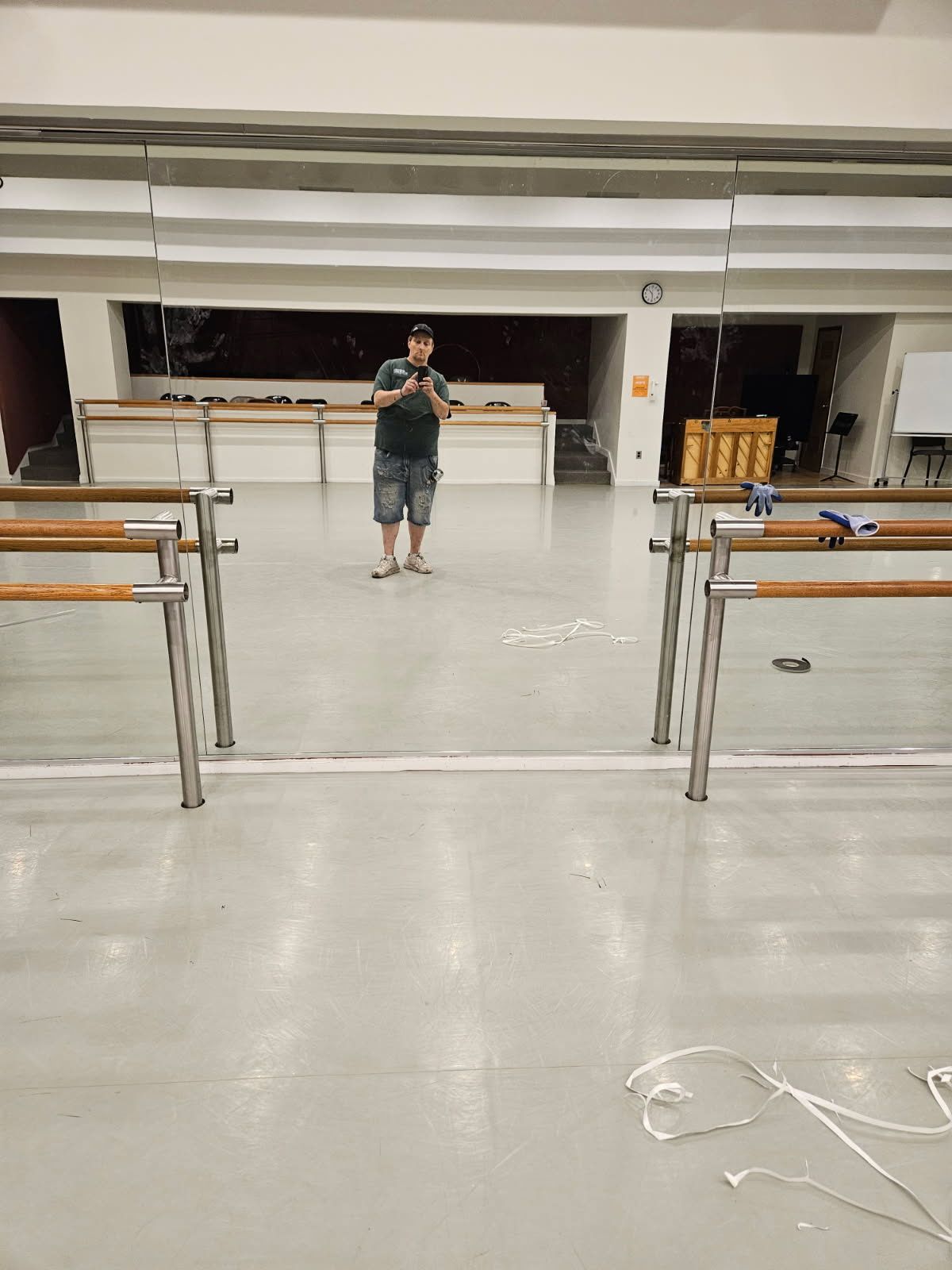
Mirror glass is annealed glass with a reflective coating. It is cut to your exact size and edge finish. See our custom mirrors.
Which Glass Goes Where
Find your project in the left column and read across.
| Project | Tempered | Laminated | Insulated | Low-Iron | Frosted |
|---|---|---|---|---|---|
| Shower door or enclosure | ● | ○ | ○ | ||
| Storefront entry door and sidelites | ● | ○ | ○ | ○ | |
| Storefront windows | ○ | ○ | ● | ○ | |
| Home windows and patio doors | ○ | ○ | ● | ○ | |
| Bathroom privacy glass | ○ | ● |
● Typical choice ○ Available option. Your project may call for something different, and we confirm the right glass when we measure.
Glass on Real Baltimore Jobs

Let Us Measure and Recommend
Tell us what you are planning. We will check the opening, recommend the right glass for the job, and quote it in writing.
Request a Free QuoteOr call (443) 443-5585.